
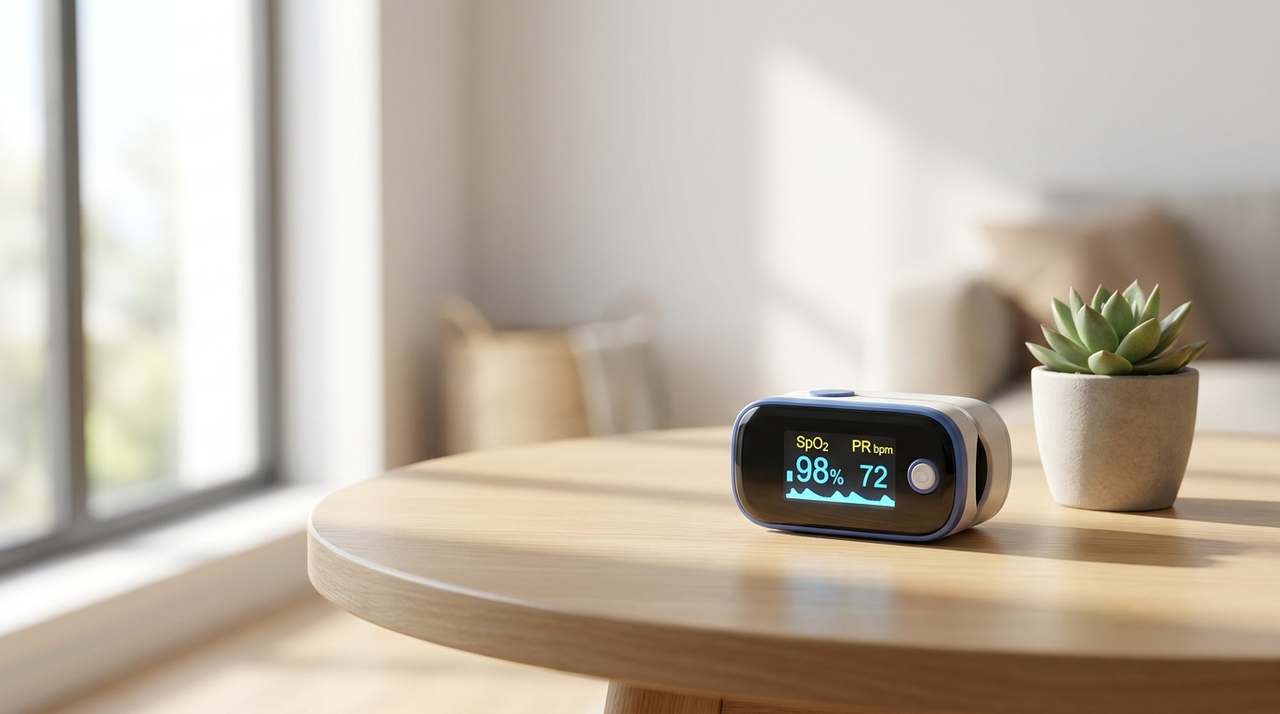
The pulse oximeter is a small device that is placed on the finger and measures blood oxygen saturation (SpO2) and pulse rate in seconds. It is very useful for people with respiratory problems, the elderly, or anyone who wants to monitor their oxygen levels at home. We explain how to use it and what values are normal.
What does a pulse oximeter measure?
- SpO2 (oxygen saturation): the percentage of oxygen carried by the blood. This is the main data point.
- Pulse (bpm): beats per minute.
How to use the pulse oximeter step by step
- Make sure your hand is warm and at rest; cold can falsify the reading.
- Remove nail polish if you are wearing it (it can interfere).
- Insert your index or middle finger fully into the device.
- Keep your hand still and resting; do not speak or move.
- Wait about 30-60 seconds until the number stabilizes and write it down.
What oxygen values are considered normal
| SpO2 | Interpretation |
| 95–100 % | Normal |
| 91–94 % | Slightly low: monitor |
| less than 90 % | Low: consult a professional |
A normal resting pulse in an adult is usually between 60 and 100 beats per minute. These values are indicative; people with chronic respiratory diseases may have different reference values indicated by their doctor.
Common errors that falsify the measurement
- Cold hands or poor circulation.
- Nail polish or artificial nails.
- Moving during measurement.
- Very intense light directly on the sensor.
Recommended pulse oximeters
At Ortopedium, you can find finger pulse oximeters for adults and children, with clear displays and fast readings:
- Adult pulse oximeter — OLED screen, measures SpO2 and pulse in seconds.
- Pediatric pulse oximeter — designed for small children's fingers.
Are you going to measure a baby or a child? We explain it step by step, with normal values by age, in our guide on pediatric pulse oximeters: how to measure oxygen in babies and children.
Related guides for home care
If you monitor your health at home, these guides will be useful:
- How to measure blood pressure correctly at home with a blood pressure monitor
- Which thermometer to choose: non-contact, digital, or gallium
- Humidifier: benefits for the respiratory tract
Frequently asked questions
What oxygen saturation is normal?
In a healthy person, an SpO2 between 95% and 100% is considered normal. Below 95%, it is advisable to monitor, and if it drops below 90%, consult a healthcare professional.
How do you put on a pulse oximeter?
It is placed on the index or middle finger, with the hand warm and at rest, and you wait 30-60 seconds for the number to stabilize.
Why does the pulse oximeter give low readings or not measure correctly?
The most common causes are cold hands, nail polish, moving during measurement, or poor peripheral circulation.