
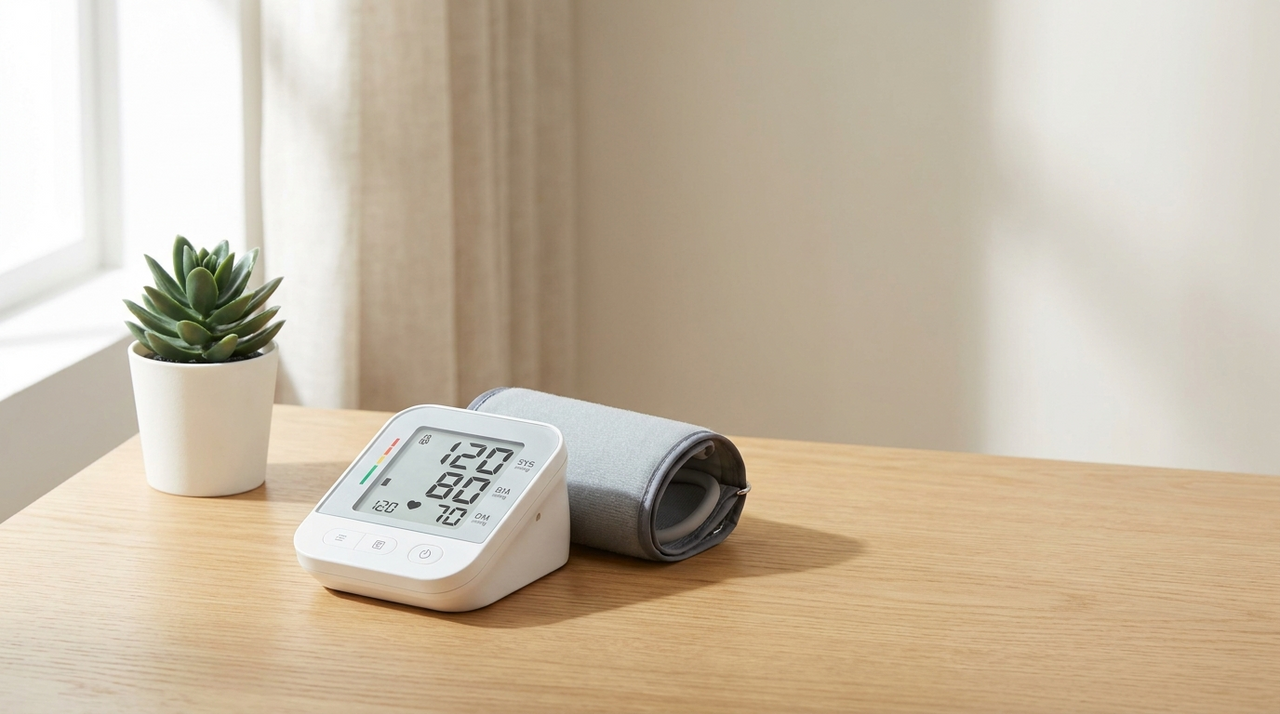
Measuring your blood pressure at home is one of the best ways to monitor your cardiovascular health. But for readings to be reliable, you need to do it correctly. In this guide, we explain which blood pressure monitor to choose and how to measure step-by-step to avoid making mistakes.
Arm or wrist blood pressure monitor: which is better?
- Arm: this is the most accurate and recommended by doctors for most people. The cuff is placed on the upper arm, at heart level.
- Wrist: more compact and convenient to carry. It's a good option if you find it difficult to place the cuff on your arm, but you need to keep your wrist exactly at heart level for an accurate reading.
How to measure blood pressure correctly, step-by-step
- Rest for 5 minutes before measuring, sitting and relaxed.
- Do not drink coffee, smoke, or exercise in the 30 minutes prior.
- Sit with your back supported, feet on the floor, and legs uncrossed.
- Rest your arm on a table, with the cuff at heart level.
- Place the cuff on your skin, neither too loose nor too tight.
- Do not talk during the measurement.
- Take two or three measurements one minute apart and note the average.
- Measure at the same time each day for comparison.
How to interpret the values
Blood pressure is expressed with two numbers: systolic (the top number) and diastolic (the bottom number). As a general reference for adults:
| Classification | Systolic | Diastolic |
| Optimal | less than 120 | less than 80 |
| Normal | 120–129 | 80–84 |
| Elevated | 130–139 | 85–89 |
| Hypertension | 140 or more | 90 or more |
These values are indicative. If you have doubts or repeated high readings, always consult your doctor.
Common errors that falsify measurement
- Measuring right after moving, eating, or drinking coffee.
- The cuff over clothing or at an incorrect height.
- Talking or moving while measuring.
- Taking only one measurement instead of the average of several.
Recommended blood pressure monitors
At Ortopedium, you'll find the diagnosis and therapy catalog, with automatic digital blood pressure monitors:
- Sanitec arm blood pressure monitor — the most accurate, large and easy-to-read display.
- Sanitec wrist blood pressure monitor — compact and convenient to carry.
Frequently asked questions
Is an arm or wrist blood pressure monitor better?
The arm monitor is usually more accurate and is recommended for most people. The wrist monitor is more convenient and portable, but requires the wrist to be kept at heart level for a reliable reading.
How many times should I measure my blood pressure?
Ideally, take two or three measurements one minute apart and note the average, always at the same time of day.
What blood pressure is considered normal?
In adults, normal blood pressure is approximately below 130/85 mmHg. Repeated readings of 140/90 or more are considered hypertension, and you should consult a doctor.