
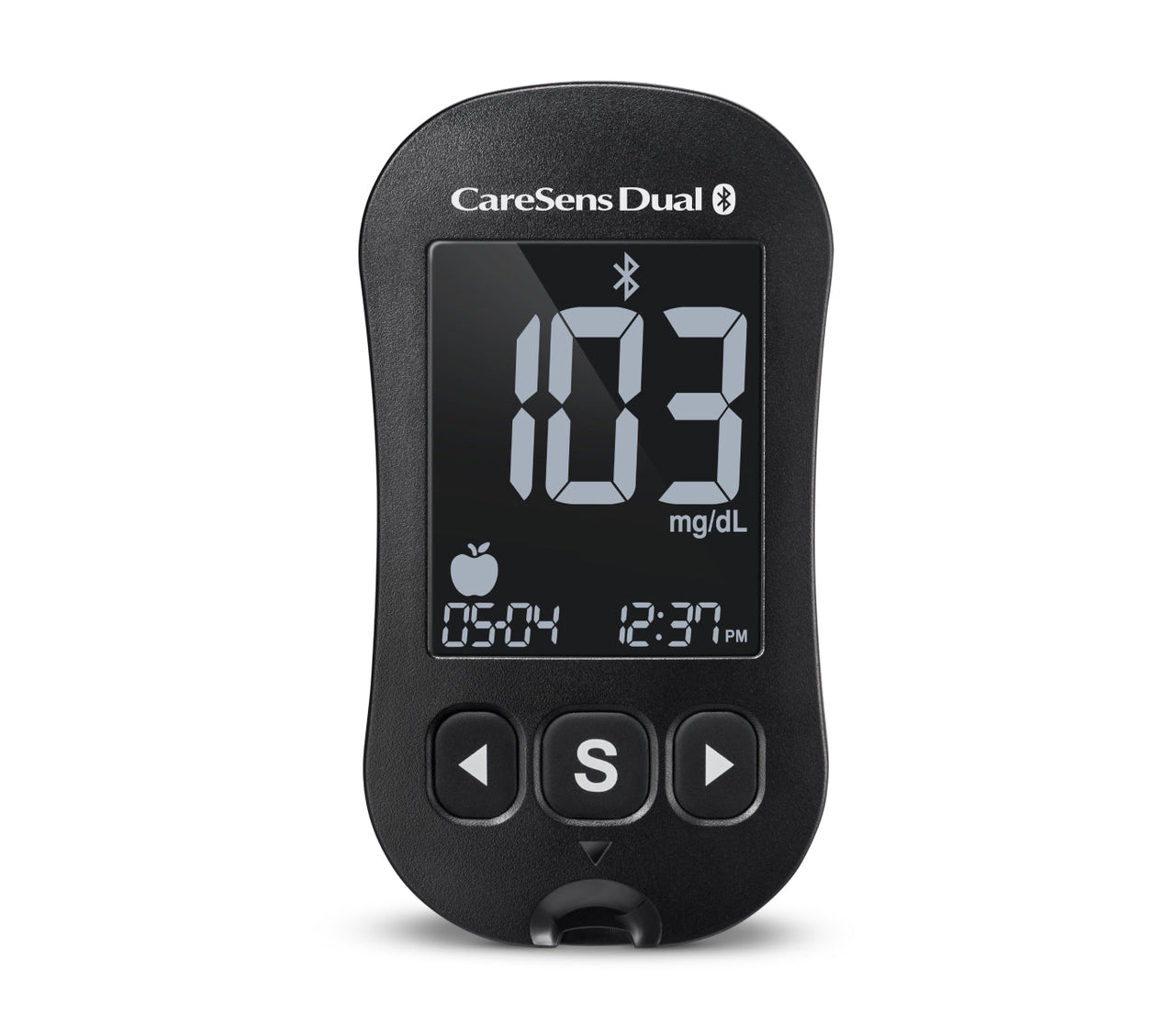
Hypoglycaemia is a drop in blood sugar below 70 mg/dL. It is common in people with diabetes on treatment and, once properly identified, it resolves quickly. Here we explain how to recognise it and what to do.
Symptoms of low blood sugar
- Trembling, cold sweats and palpitations.
- Dizziness, weakness or a sudden feeling of hunger.
- Irritability, confusion or difficulty concentrating.
- Blurred vision or tingling in the lips.
If these appear, the first thing to do is measure your blood glucose with the blood glucose meter to confirm it.
What to do: the 15/15 rule
- Take 15 g of fast-acting sugar: a fruit juice, 3-4 glucose tablets or a tablespoon of sugar.
- Wait 15 minutes and measure your blood glucose again.
- If it is still below 70 mg/dL, repeat. Once it recovers, eat something with longer-lasting carbohydrates (bread, biscuits).
Common causes
- Too much insulin or medication.
- Skipping meals or eating less than planned.
- Intense exercise without adjusting food intake.
- Alcohol consumption.
When it is an emergency
If the person loses consciousness or cannot swallow, do not give them food or drink: this is an emergency. Use glucagon if available and call the emergency services.
How to prevent it
Measure regularly, do not skip meals, adjust your medication with your doctor and always carry some fast-acting sugar with you. Check the table of normal blood glucose levels to know where your limits are.
Frequently asked questions
At what level is it considered hypoglycaemia?
Below 70 mg/dL is considered hypoglycaemia.
What should I take if my blood sugar drops?
15 g of fast-acting sugar (juice, glucose tablets or sugar), wait 15 minutes and measure again.
Can it be serious?
Yes. If there is a loss of consciousness it is an emergency: do not give food or drink and call the emergency services.
Informational content; it does not replace medical advice. In the event of severe hypoglycaemia, contact the emergency services.