
There are two ways to monitor blood glucose: the classic meter (finger prick and strip) and the continuous glucose monitor (CGM), which measures automatically. Neither is “better” in the abstract: it depends on your situation. Here are the differences.
What each one is
- Blood glucose meter: you measure whenever you want with a drop of blood and a strip. Accurate, affordable and with no device attached to your body.
- Continuous monitor (CGM): a small sensor on your arm measures interstitial glucose every few minutes and sends it to your phone. Very convenient, but more expensive and needing replacement every 1-2 weeks.
Comparison table
| Glucose meter | Continuous monitor | |
|---|---|---|
| How it measures | Finger prick + strip | Automatic, continuous |
| Point-in-time accuracy | Very high | High (measures interstitial fluid) |
| Convenience | Requires pricking | No repeated finger pricks |
| Cost | Low | High (subscription) |
Which should you choose?
The glucose meter is ideal for occasional checks, tighter budgets and anyone who does not want to wear anything attached. The sensor suits people who measure many times a day and want to see trends. In fact, many people combine both and use the meter to calibrate or confirm doubtful sensor readings.
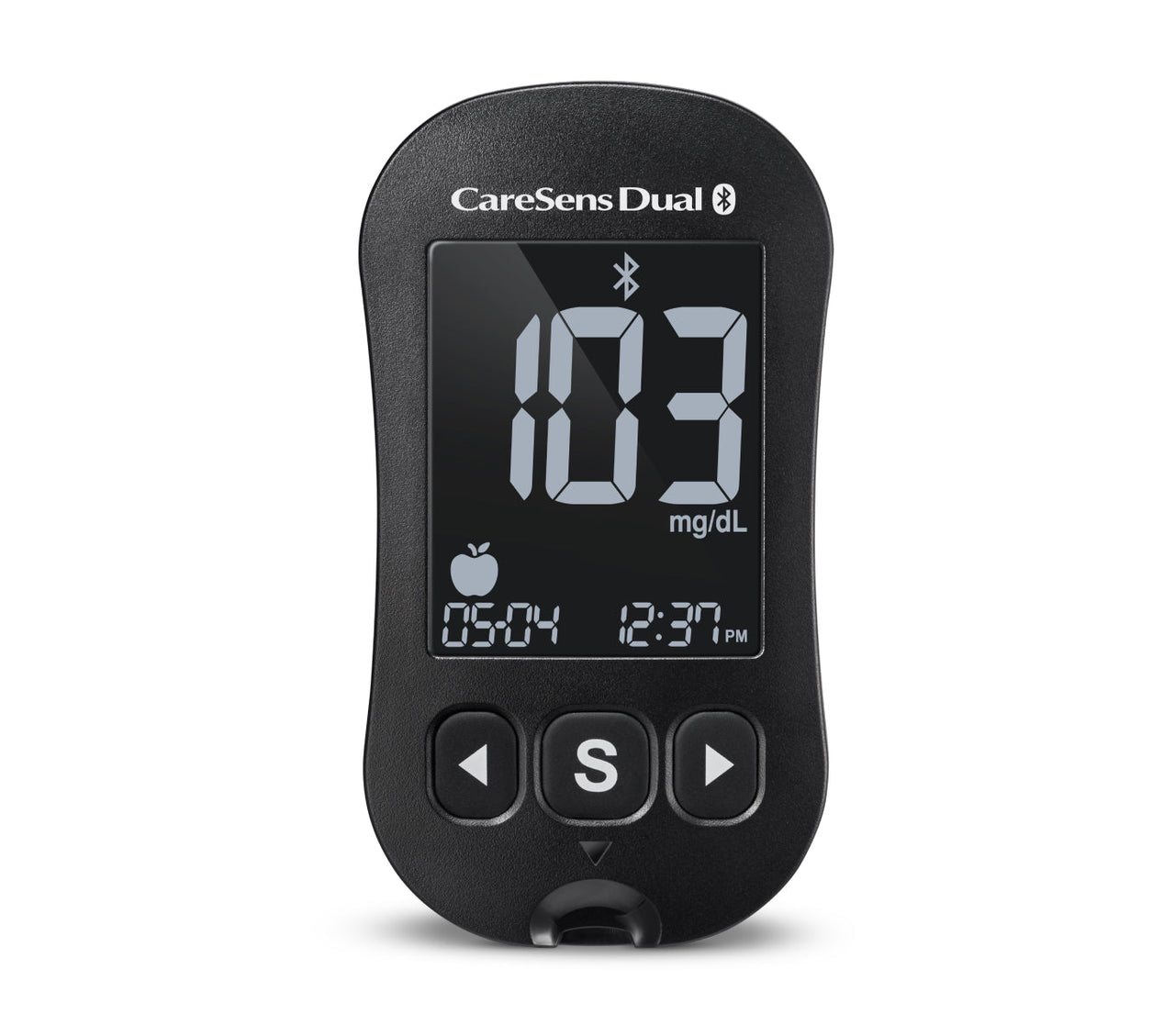
If you are looking for a reliable, straightforward meter, the CareSens Dual measures glucose and ketones with CareSens Pro strips. You will find everything in the glucose and diabetes monitoring category.
Frequently asked questions
Does the sensor replace the glucose meter?
Not always. In many cases a meter is still recommended to confirm doubtful readings or during hypoglycaemia.
Which is more accurate?
The meter measures directly in blood; the sensor measures interstitial fluid, with a slight lag. Both are reliable when used correctly.
Informational content; it does not replace medical advice.