
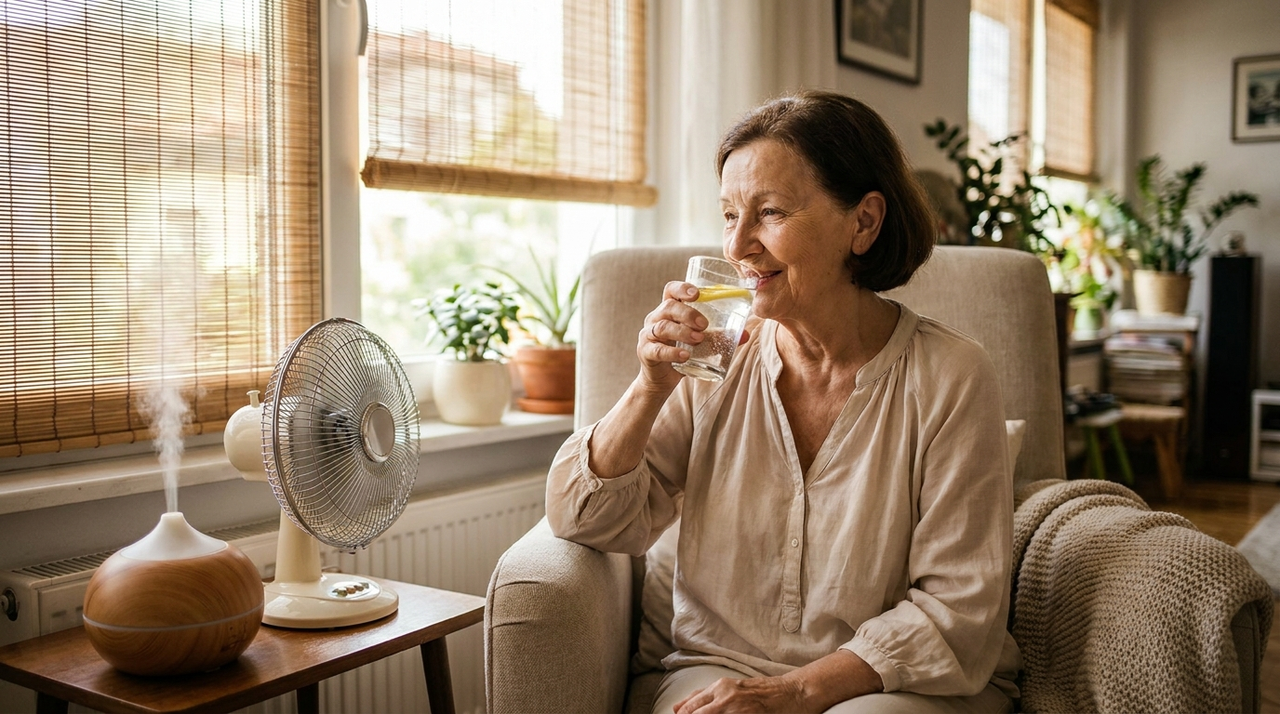
With heatwaves, older people are the most vulnerable group: with age, body temperature regulation worsens and thirst is felt less, so they can become dehydrated or overheat without realizing it. These are the key care tips to protect them in summer.
Hydration: drink even if not thirsty
Offer water regularly throughout the day, without waiting for them to be thirsty. Cold infusions, fruits with high water content (watermelon, cantaloupe), and broths also help. Avoid alcohol and excessive coffee.
Schedules: avoid the hottest hours
They should not go out between 12:00 PM and 5:00 PM. If they must go out, it's better first thing in the morning or at dusk, in the shade and with stops in cool places.
A cool home
Lower blinds and close curtains during direct sun, ventilate early in the morning and at night, and use a fan or air conditioning during the central hours. A humidifier helps when the air is very dry. Store medications in a cool place, as heat can alter them.
Warning signs of heatstroke
Watch for these symptoms and act quickly: dizziness or weakness, confusion, headache, very hot and dry skin, nausea, or rapid pulse. Take the person to a cool place, cool their skin with damp cloths, give them water if conscious, and if they don't improve or are confused, call 112. Having a blood pressure monitor and a pulse oximeter on hand helps monitor the situation at home.
Products that help in summer
At Ortopedium, you'll find humidifiers for a more pleasant environment, and diagnosis and therapy equipment (blood pressure monitors and pulse oximeters) to monitor health at home during hot days.
Frequently Asked Questions
Why does heat affect older people more?
With age, body temperature regulation worsens, they sweat less, and feel less thirsty, so they can become dehydrated or overheat without clearly perceiving it.
How much water should an older person drink in summer?
They should drink regularly throughout the day without waiting to be thirsty. For doubts or conditions such as kidney or heart problems, it is advisable to follow their doctor's instructions.
What are the symptoms of heatstroke?
Dizziness or weakness, confusion, headache, very hot and dry skin, nausea, and rapid pulse. If these symptoms appear, cool the person down, and if they don't improve, call 112.